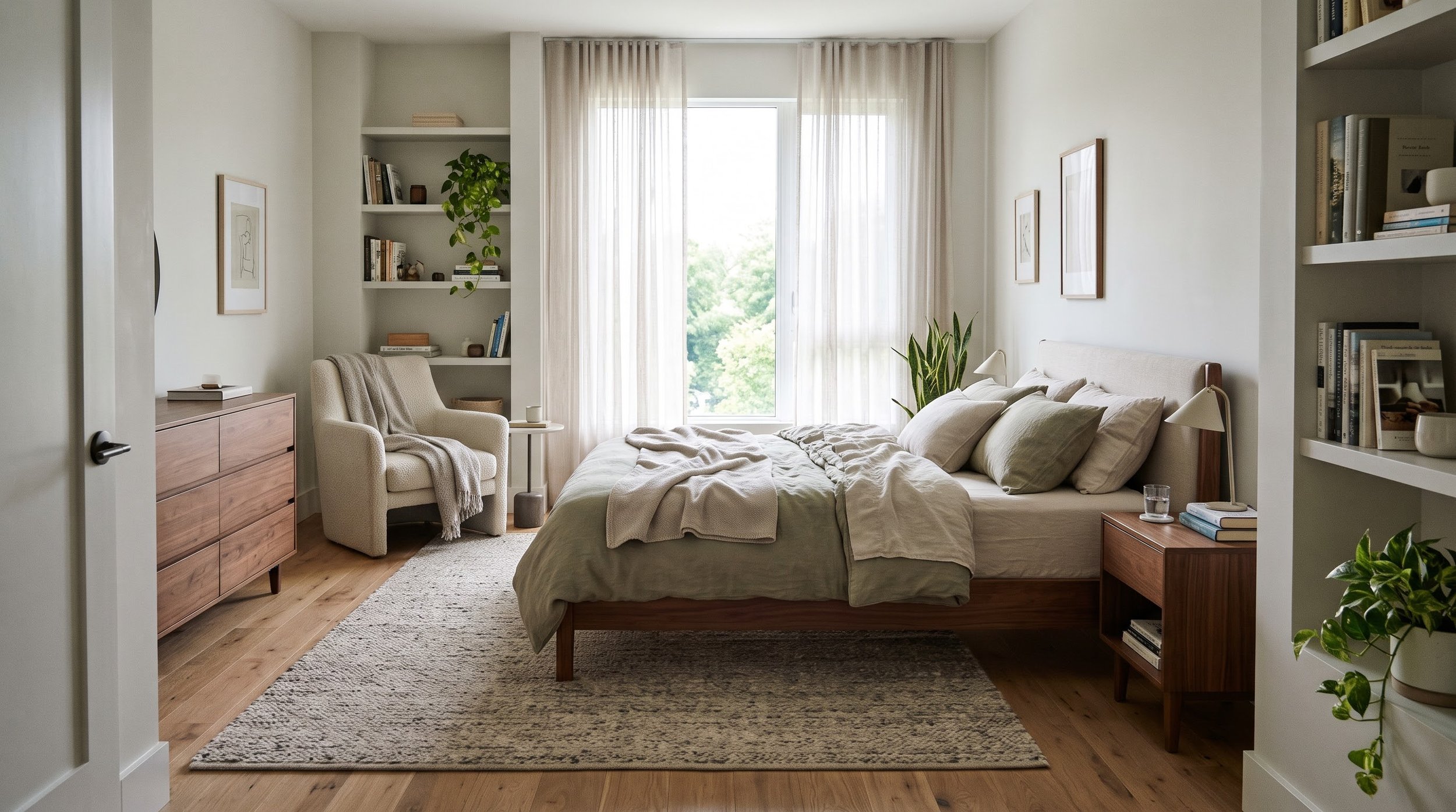
A well-designed bedroom should feel like a place to slow down, recharge, and disconnect from the demands of everyday life. While color palettes, lighting, and decorative details contribute to its atmosphere, furniture plays an equally important role in determining how comfortable and functional the space becomes.
From the bed and bedside tables to dressers, wardrobes, and occasional seating, each piece should serve a purpose without making the room feel crowded. The goal is to create a balanced environment where comfort and practicality work together.
Bedroom renovations and furniture purchases remain an important part of homeowners’ design priorities. According to the 2026 U.S. Houzz & Home Study, bedrooms accounted for 23% of renovated interior rooms in 2025. The study also reported that 39% of renovating homeowners purchased large furniture, highlighting the continued importance of selecting substantial pieces that support everyday living.
Here are some ways to approach bedroom furniture selection and create a space that feels thoughtfully designed.
1. Make the Bed the Centerpiece
The bed is typically the largest furniture piece in a bedroom, making it the natural starting point for the overall layout.
Its size, frame, headboard, and placement influence how the rest of the room is arranged. Before choosing a bed, consider the room dimensions, ceiling height, existing architectural features, and the amount of circulation space needed.
Some options include:
Upholstered beds: Introduce softness and create a comfortable focal point.
Wooden bed frames: Add warmth and natural texture.
Platform beds: Offer a streamlined appearance and can work well in contemporary interiors.
Storage beds: Provide additional space for linens and other belongings.
Four-poster beds: Add architectural presence in rooms with sufficient ceiling height.
A statement bed can anchor the room, but it should not overwhelm the available space.
2. Choose Bedside Tables That Balance Style and Function
Bedside tables are small pieces of furniture, but they have a significant impact on the functionality of a bedroom.
They provide convenient surfaces for lamps, books, phones, and other everyday essentials. Depending on the room’s layout, they can also introduce additional storage through drawers or open shelving.
When selecting bedside tables, consider their height in relation to the mattress, available floor space, and the overall proportions of the bed.
Matching bedside tables create a symmetrical arrangement, while different but complementary pieces can give the room a more relaxed and collected appearance.
3. Plan Storage Before Adding More Furniture
Bedrooms often become cluttered when storage is not considered early in the design process.
Rather than filling the room with multiple standalone cabinets, think about how storage can be integrated into the furniture plan.
Consider:
Built-in wardrobes that maximize vertical space.
Dressers that provide additional drawer storage.
Beds with concealed storage compartments.
Nightstands with drawers for smaller belongings.
Storage benches at the foot of the bed.
The 2026 Houzz study found that 33% of renovating homeowners purchased storage or organizational products in 2025. This reinforces the importance of incorporating practical storage solutions into residential design.
A well-planned storage arrangement can help maintain a cleaner visual environment while keeping everyday essentials accessible.
4. Select Bedroom Furniture That Fits the Room
One of the most common bedroom design mistakes is introducing too many large furniture pieces.
A spacious primary bedroom may accommodate a king-size bed, a dresser, two bedside tables, and an occasional chair. A smaller bedroom may function better with a more streamlined arrangement.
Before purchasing furniture, measure the room and consider how people will move around the space.
Pay attention to:
Clearance on both sides of the bed where possible.
Space between the bed and wardrobe doors.
Drawer-opening clearance.
Access to windows and doors.
Walking paths between furniture pieces.
The objective is not to fill every available corner. It is to create a layout that feels comfortable and easy to navigate.
5. Introduce an Accent Chair or Bedroom Bench
A bedroom does not have to be limited to sleeping and storage furniture. A carefully selected accent piece can make the room more versatile.
An upholstered chair can create a small reading corner, while a bench at the foot of the bed offers a convenient place to sit or organize clothing.
Other options include:
A compact lounge chair beside a window.
An upholstered ottoman for additional seating.
A storage bench for extra linens.
A small vanity chair paired with a dressing table.
These pieces work best when they complement the room’s overall proportions rather than compete with the bed as the main focal point.
6. Choose Materials That Encourage a Comfortable Atmosphere
Bedroom furniture should contribute to a sense of warmth and relaxation.
Natural wood, upholstered headboards, textured fabrics, and soft finishes can make the room feel more inviting. Combining different materials also prevents the space from looking overly coordinated.
For example, a wooden bed frame can be paired with upholstered bedside chairs, linen bedding, and a textured area rug.
When choosing finishes, consider maintenance and durability as well. Bedroom furniture may not experience the same level of wear as living room furniture, but it should still be selected for long-term use.
7. Use Lighting to Complement the Furniture Layout
Lighting should be considered alongside furniture selection, particularly around the bed and bedside tables.
Instead of relying entirely on a central ceiling fixture, introduce multiple lighting sources to accommodate different activities.
Consider:
Bedside table lamps for reading and ambient lighting.
Wall-mounted sconces to free up nightstand space.
Pendant lights for a more decorative bedside feature.
Floor lamps beside accent chairs.
Soft ambient lighting to create a comfortable evening atmosphere.
The 2026 Houzz study found that 35% of renovating homeowners purchased lamps in 2025. This demonstrates how lighting purchases remain an important part of completing and furnishing residential interiors.
The placement of lighting should be coordinated with furniture dimensions and electrical access before installation.
8. Avoid Buying Every Piece From the Same Collection
A bedroom can feel cohesive without having every furniture piece match.
In fact, combining different styles and finishes often creates a more personal and layered interior.
A contemporary bed can work alongside vintage-inspired nightstands, while a simple dresser can complement a more sculptural accent chair.
To maintain visual consistency, repeat certain elements throughout the room, such as wood tones, metal finishes, colors, or shapes.
The result is a bedroom that feels thoughtfully assembled rather than purchased as a complete showroom set.
Why This Matters
A bedroom is one of the most personal spaces in a home, and its furniture should reflect both the homeowner’s lifestyle and the room’s functional requirements.
The 2026 U.S. Houzz & Home Study found that bedrooms represented 23% of renovated interior rooms in 2025, while 39% of renovating homeowners purchased large furniture. These findings highlight the continued importance of bedroom planning and substantial furniture selections in residential projects.
Thoughtful furniture choices can improve storage, circulation, comfort, and the overall atmosphere of the room. More importantly, they help ensure that the bedroom supports everyday routines without feeling overcrowded or unnecessarily complicated.
Final Thoughts
A restful bedroom is not defined by how much furniture it contains or how expensive its pieces are. It comes from choosing the right elements and arranging them in a way that supports comfort, function, and visual balance.
At West Village Interiors, we believe bedroom design should begin with understanding how homeowners use their space. From selecting the right bed to incorporating practical storage and complementary accent furniture, every detail should contribute to a room that feels comfortable, personal, and thoughtfully designed.