The Home Office Mistakes That Make Working From Home Harder (And How to Fix Them)
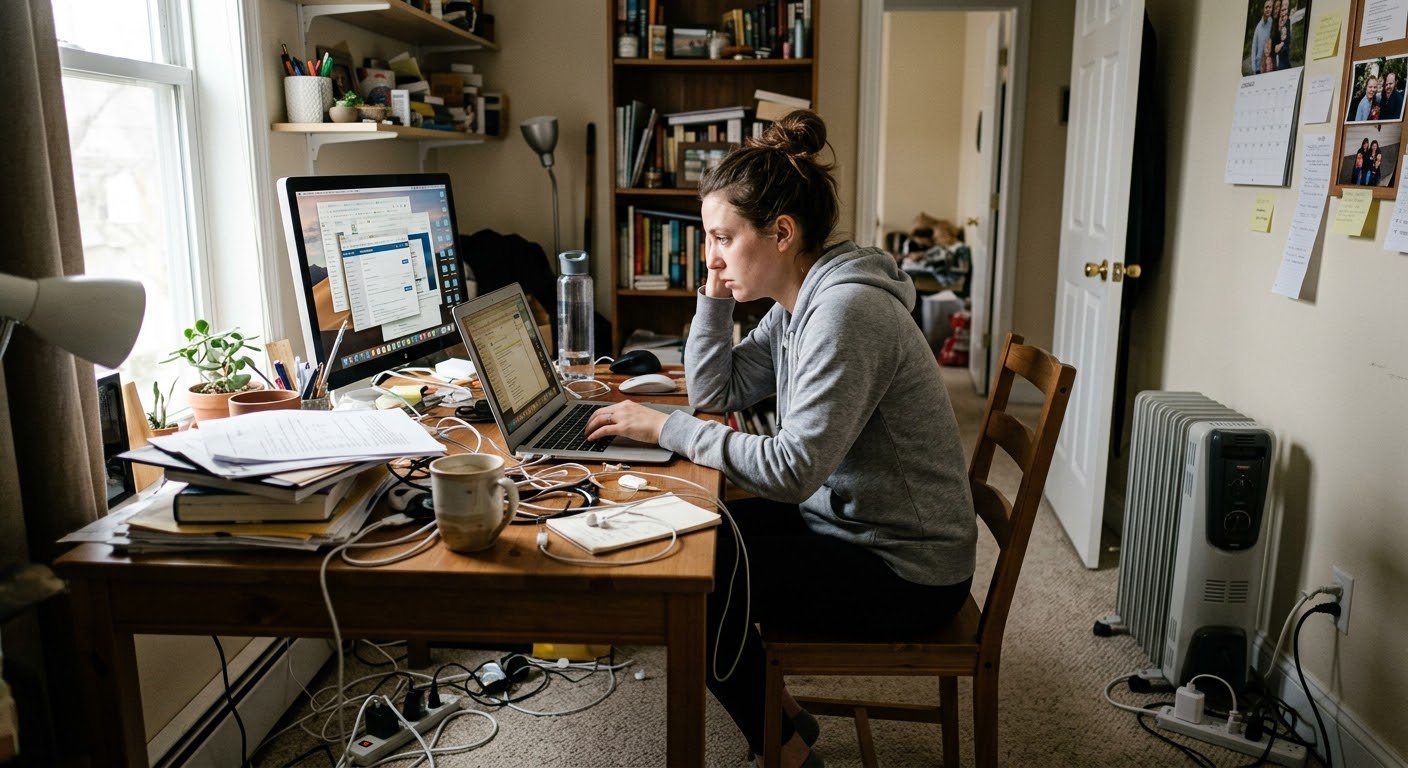
A beautiful home office isn't necessarily a productive one. Whether you're working remotely full-time or a few days a week, the way your workspace is designed can directly affect focus, posture, and daily comfort.
According to a 2024 Pew Research Center survey, the majority of remote-capable employees continue to work from home at least part of the week, making a dedicated workspace more important than ever. 
At West Village Interior, we design home offices that balance functionality with residential warmth—because your workspace should feel inspiring, not corporate.
1. Working in the Wrong Spot
The dining table may work temporarily, but it rarely supports long-term productivity.
Choose a location with:
Natural daylight
Minimal foot traffic
Access to outlets
Enough wall space for storage
Even a small corner can become a highly functional office with thoughtful planning.
2. Ignoring Ergonomics
Most people focus on the desk and forget the chair.
A proper ergonomic setup includes:
Feet flat on the floor
Elbows at roughly 90°
Screen at eye level
Lumbar support
Comfort directly influences how long you can work without fatigue.
3. Using Only Overhead Lighting
Ceiling lights often create glare and harsh shadows during video calls.
Layer your lighting with:
A desk lamp for task lighting
Ambient lighting for warmth
Natural light whenever possible
The result is a workspace that feels brighter and more inviting throughout the day.
4. Letting Clutter Build Up
Visual clutter competes for attention.
Incorporate closed storage, cable management, and desktop organizers to keep frequently used items accessible without making the room feel busy.
5. Forgetting That It's Still Part of Your Home
Your office should blend seamlessly with the rest of your interior—not feel like an isolated cubicle.
Add personality through artwork, textured rugs, shelving, greenery, and warm materials to create a space you'll actually enjoy spending time in.
Why This Matters
Research consistently shows that thoughtfully designed work environments can improve comfort, satisfaction, and productivity. 
A well-designed home office isn't about having more space—it's about making the space you have work better.
Final Thoughts
Working from home is no longer a temporary trend. Investing in a functional, beautiful home office is an investment in how you live and work every day.