Beyond the Desk: 6 Design Details That Shape the Employee Experience
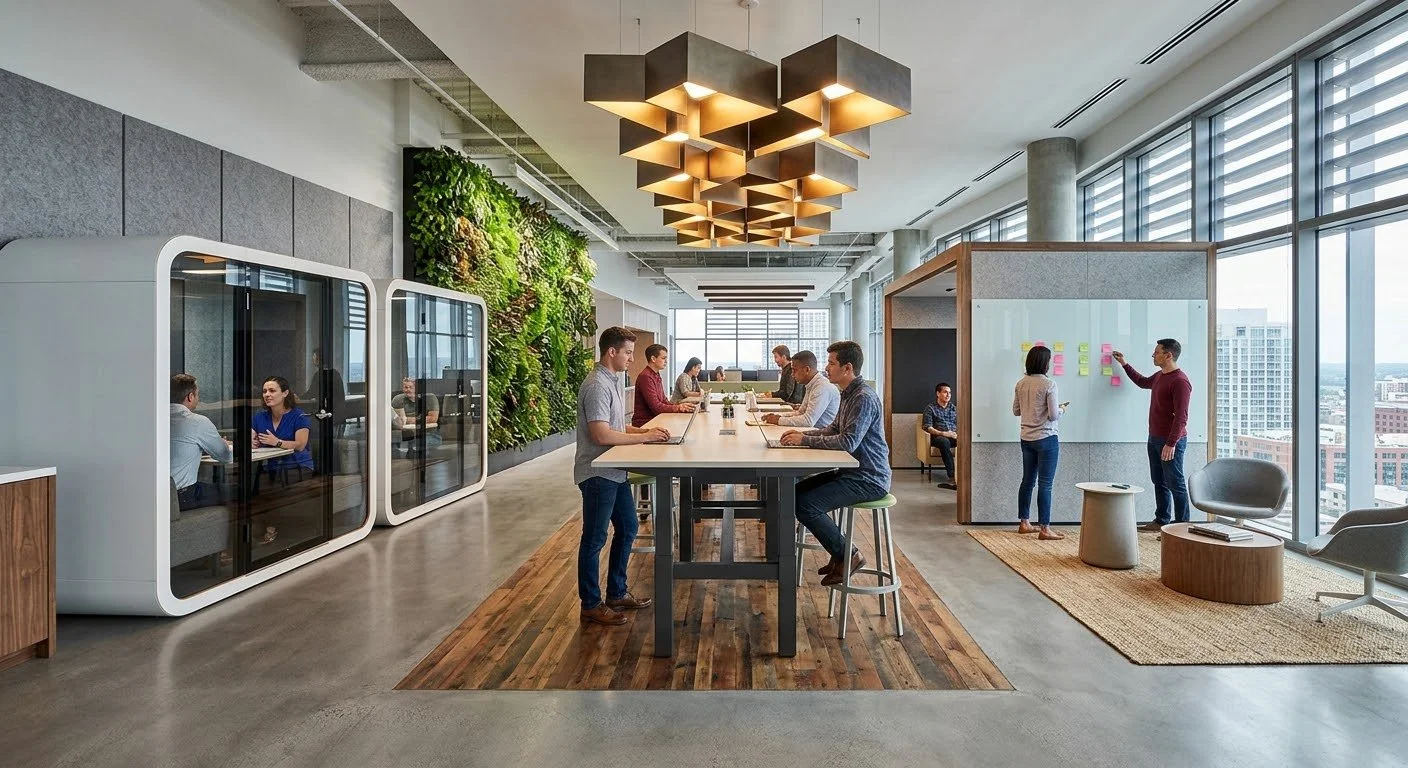
When businesses think about office design, desks and conference rooms usually come first.
But employees experience a workplace through much more than their workstation. Lighting, acoustics, circulation, materials, and even where they can pause between tasks all contribute to how a space feels throughout the day.
At West Village Interior, we look beyond individual furniture pieces to create commercial interiors that support the complete workplace experience.
1. The First Few Steps Into the Office
The transition from street to workplace sets the tone.
A thoughtfully designed entry can establish the company’s identity through:
Materials
Lighting
Branding
Artwork
Furniture
It doesn’t need to be extravagant. It needs to feel intentional.
2. What Employees See From Their Desks
A workstation isn’t experienced in isolation.
Consider what employees see throughout the day—blank walls, storage, greenery, windows, artwork, or another workspace.
Thoughtful sightlines can make an office feel more open and visually engaging.
3. Lighting Beyond the Ceiling
A grid of overhead lights doesn’t have to be the only source of illumination.
Layered lighting can include decorative pendants, wall lighting, task lighting, and accent fixtures.
Different lighting levels also help distinguish different zones within an open workplace.
4. Materials People Interact With
Employees touch doors, handles, countertops, tables, chairs, and other surfaces every day.
Material selection therefore affects more than appearance.
Durability, maintenance, texture, and tactile quality should all be considered when selecting finishes.
5. The Spaces Between Spaces
Not every workplace interaction happens at a desk or conference table.
Small seating areas, coffee points, corridors, and informal gathering spots can create opportunities for employees to pause, connect, or have quick conversations.
These transitional areas can become valuable parts of the workplace rather than leftover square footage.
6. Acoustics You Don’t Have to Think About
A beautiful office can still be uncomfortable if every conversation travels across the room.
Acoustic materials can help manage sound while also contributing to the visual identity of the space.
Ceiling treatments, wall panels, rugs, upholstered furniture, and other soft surfaces can all play a role.
Why This Matters
Good workplace design isn’t only about how an office photographs.
It is about how the environment performs throughout an ordinary workday—from arrival to focused work, collaboration, breaks, and everything in between.
Final Thoughts
The details employees interact with every day are often the ones that matter most.
By considering the complete experience—not just the desk or conference room—businesses can create workplaces that feel intentional from the moment people walk in.
At West Village Interior, we design commercial interiors around the way people actually use them, combining function, brand identity, and thoughtful material choices.