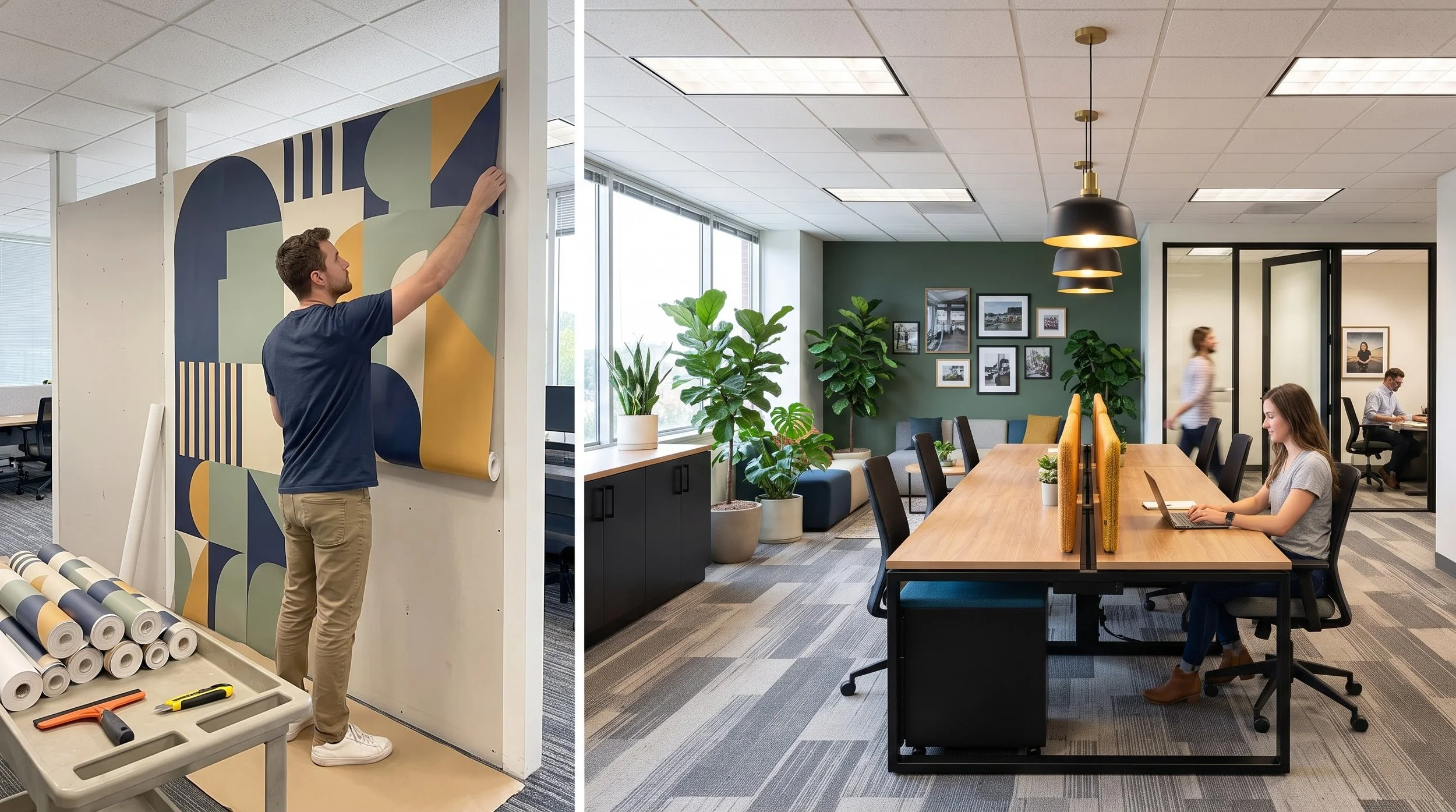
An office doesn’t always need a complete renovation to feel more modern, professional, and functional. Sometimes, the most effective transformation comes from rethinking the layout, upgrading key finishes, and introducing carefully selected furniture and lighting.
For businesses looking to improve their workplace while managing costs and minimizing disruption, a targeted design refresh can be a practical alternative to starting from scratch.
At West Village Interior, we believe successful commercial interiors balance visual impact with everyday performance. The goal is to identify which changes will make the greatest difference to employees, clients, and the overall business environment.
1. Start With the Existing Layout
Before purchasing new furniture or finishes, evaluate how the office currently functions.
Are workstations overcrowded? Is the reception area difficult to navigate? Are meeting rooms underused while collaborative spaces are constantly occupied?
Small layout adjustments can improve circulation, create more useful zones, and make existing square footage work harder.
Consider repositioning furniture, removing unnecessary pieces, or reorganizing work areas around the activities that take place there most often.
Sometimes, the best starting point isn’t buying something new—it’s making better use of what you already have.
2. Upgrade the Furniture That Matters Most
Replacing every desk and chair can quickly increase project costs. Instead, prioritize furniture that has the greatest influence on comfort, functionality, and the overall appearance of the workplace.
Start by assessing:
Reception furniture: Does the entrance communicate the right impression to visitors?
Task chairs: Are employees supported comfortably throughout the workday?
Conference tables: Do they suit the room’s size and meeting requirements?
Lounge seating: Does the space encourage comfortable waiting or informal conversations?
Keep furniture that remains functional and fits the design direction. Replace or reupholster pieces that are visibly worn, uncomfortable, or poorly suited to their purpose.
A selective approach helps create a more cohesive workplace without unnecessary spending.
3. Use Lighting to Modernize the Space
Lighting can influence how an office looks and feels, even when the architecture remains unchanged.
Harsh illumination, inconsistent color temperatures, and poorly positioned fixtures can make a workspace feel uncomfortable or dated.
Depending on the existing electrical layout, consider introducing decorative pendants in reception areas, task lighting at workstations, or accent lighting to highlight architectural details.
Where possible, make better use of natural daylight and reduce glare on computer screens.
A layered lighting scheme can create visual distinction between different areas while supporting the activities that take place in each one.
4. Refresh High-Impact Surfaces
You don’t necessarily need to replace every finish to give an office a new identity.
Focus on surfaces that are highly visible or frequently encountered, such as reception walls, meeting room finishes, cabinetry, and worn flooring.
Potential improvements include:
Repainting selected walls in a more cohesive palette.
Updating cabinet hardware.
Introducing wall paneling or architectural trim.
Refreshing outdated feature walls.
Replacing damaged flooring in specific areas.
Adding acoustic wall treatments where sound management is a concern.
The key is consistency. A few coordinated upgrades often look more intentional than several unrelated changes made at different times.
Before proceeding, assess the condition of existing materials and confirm whether any proposed work requires building approval or specialist installation.
5. Bring the Brand Into the Interior
An office should reflect the company it represents, but effective branding doesn’t require oversized logos throughout the space.
Instead, use the company’s identity to guide the selection of colors, materials, artwork, and furniture.
A creative agency might benefit from expressive artwork and distinctive finishes, while a professional services firm may prefer a restrained palette and refined materials.
Consider updating the reception area, adding curated artwork, or introducing a signature material that appears consistently across selected spaces.
These details help the workplace feel intentional and recognizable without overwhelming its functionality.
6. Improve Acoustics and Everyday Comfort
An office can look impressive but still fall short if employees struggle with noise, distractions, or uncomfortable shared spaces.
Acoustic improvements can be particularly valuable in open-plan environments, meeting rooms, and areas used for video calls.
Depending on the space, consider acoustic panels, upholstered seating, area rugs where appropriate, or soft finishes that help manage sound reflections.
Also review practical details such as access to power, the placement of shared equipment, and the comfort of break areas.
These upgrades may be less visually dramatic than a new reception desk, but they can make a meaningful difference to how the office performs.
7. Plan the Refresh in Phases
For many businesses, completing every improvement at once isn’t practical.
A phased approach allows the project to be organized around budget, operational requirements, and the availability of contractors and materials.
Start with issues that affect safety, comfort, and daily functionality. Next, address highly visible areas and finishes that influence the workplace’s overall appearance. Decorative enhancements can follow once the essential improvements are in place.
A clear design plan also helps prevent piecemeal purchases that don’t work together.
Even when upgrades happen over several months, maintaining a consistent palette, material direction, and furniture strategy helps the office feel cohesive.
Why This Matters
Refreshing an office strategically allows businesses to improve their working environment without automatically taking on the cost and disruption of a complete renovation.
By prioritizing layout, furniture, lighting, finishes, and employee comfort, companies can direct their budgets toward improvements that address actual needs.
The result is a workplace that feels more considered, functions more effectively, and better reflects the business it serves.
Final Thoughts
A modern workplace doesn’t always require a blank slate.
Sometimes, the most successful transformation comes from preserving what still works and making targeted improvements where they matter most.
At West Village Interior, we approach commercial interiors with this balance in mind—developing design solutions that respect existing spaces while improving functionality, visual cohesion, and brand identity.
The smartest office refresh isn’t about changing everything. It’s about knowing what deserves to change.