Why Acoustic Design Is Becoming Essential for Modern Office Productivity
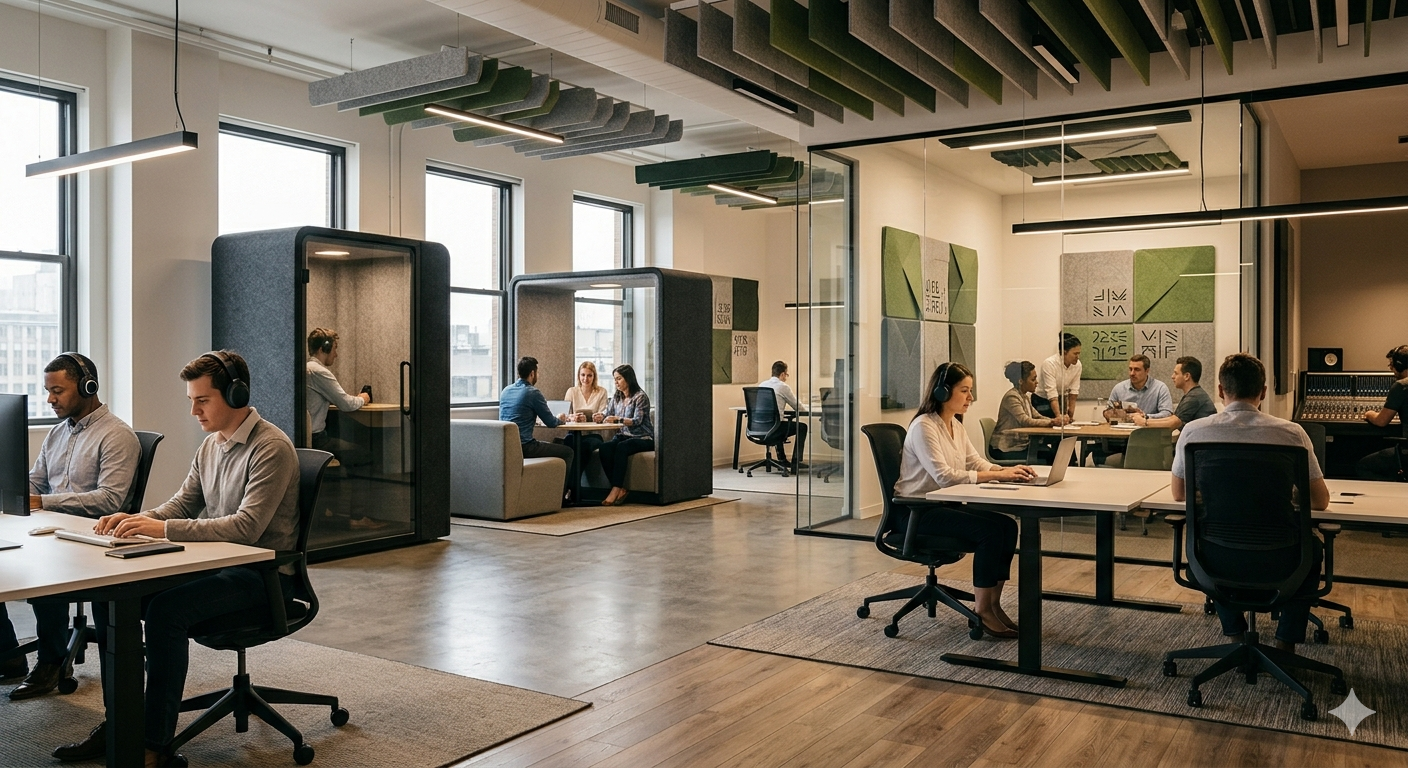
Noise is one of the biggest hidden productivity killers in modern workplaces.
Studies show workplace distractions can reduce productivity by up to 15%, with noise ranked among employees’ top complaints in open offices. Harvard Business Review Workplace Research
As office layouts become more collaborative and flexible, acoustic design has become essential.
At West Village Interior, we help businesses create workspaces that balance openness with focus.
Why This Matters
Acoustic performance directly affects workflow, morale, and business perception.
Through our trade partnerships, West Village Interior helps businesses source premium acoustic solutions and furnishings at exclusive pricing.
Final Thoughts
A beautiful office that sounds chaotic won’t perform well.
Thoughtful acoustic design ensures your workspace supports focus, collaboration, and long-term success.
1. Open Offices Create More Noise Than Expected
While open layouts improve visibility, they often increase interruptions.
Research shows employees in open offices experience 62% more distractions compared to enclosed work environments.
Without acoustic planning, collaboration often comes at the expense of concentration.
2. Acoustic Design Improves Focus
Sound-absorbing materials reduce background noise and improve clarity.
Common upgrades include:
• Acoustic ceiling panels
• Upholstered partitions
• Soft flooring
• Fabric wall systems
These solutions significantly reduce distraction without structural renovation.
3. Better Sound Improves Meeting Quality
Conference rooms with poor acoustics reduce communication clarity and increase fatigue.
Acoustic treatment improves both in-person and virtual collaboration.
4. Employees Stay Longer in Comfortable Spaces
Workplace comfort directly affects retention and attendance.
Employees are more likely to use offices consistently when environments feel calm and manageable.
5. Acoustic Planning Supports Hybrid Work
Modern offices must support:
• Quiet video calls
• Focused solo work
• Team collaboration
• Flexible occupancy shifts
Acoustic zoning makes this possible.