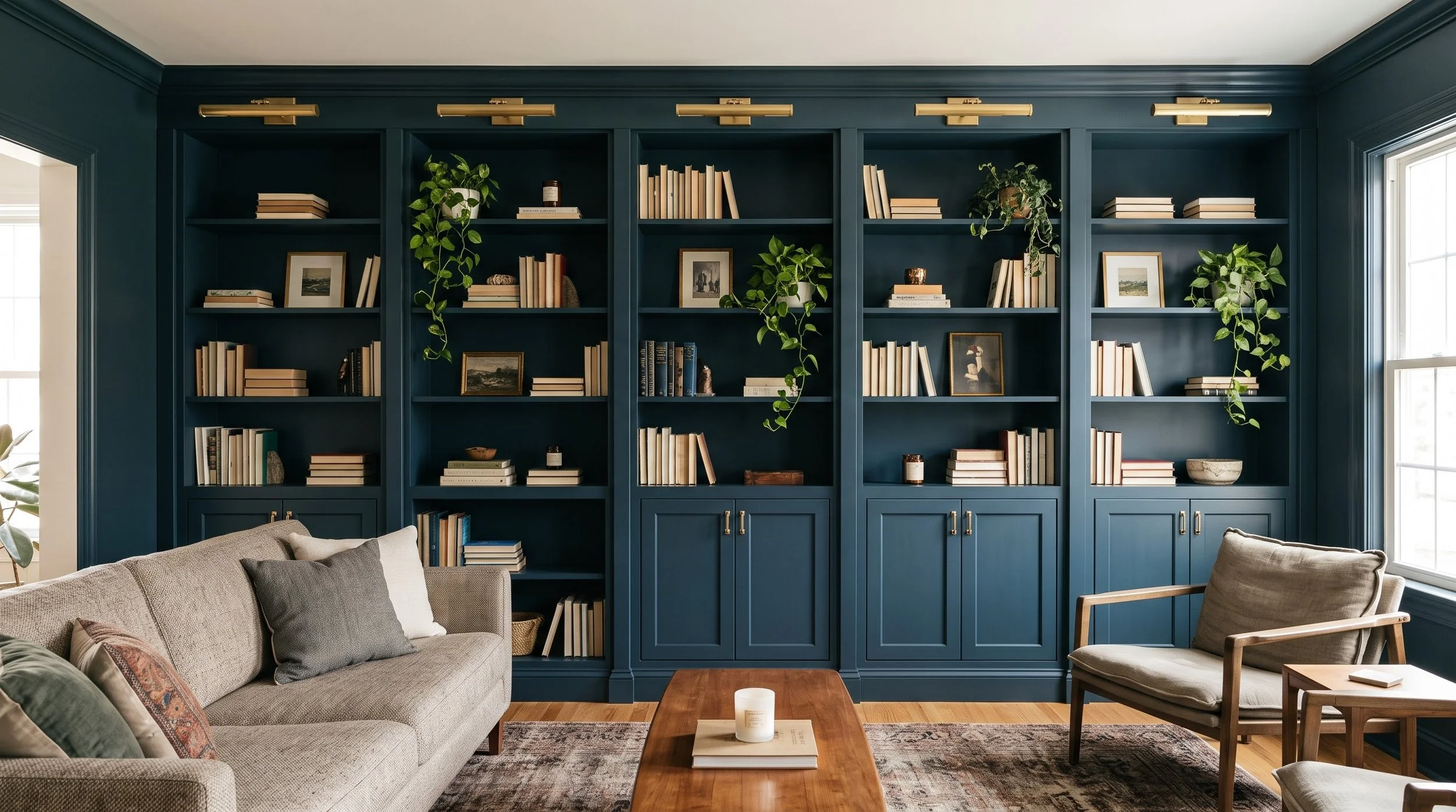
A beautifully designed home doesn’t have to come with a full custom-furniture budget. Some of the most effective interiors combine readily available furniture and décor with a few strategic construction enhancements—think floating shelves, built-in cabinetry, upgraded trim, or a thoughtfully designed media wall.
The secret is knowing where standard products work perfectly and where a custom solution can make a meaningful difference.
At West Village Interior, we believe great residential design is about making thoughtful investments. By blending accessible purchases with targeted architectural improvements, you can create a home that feels cohesive, functional, and tailored to your lifestyle.
1. Start With Ready-Made Furniture, Then Build Around It
Off-the-shelf furniture provides a practical foundation for a residential interior. Sofas, dining tables, beds, accent chairs, and side tables are often easier to source and replace than custom-made alternatives.
Rather than designing every element from scratch, choose your key furniture pieces first and identify where the room still feels unfinished.
For example, a ready-made sofa and coffee table can look much more intentional when paired with custom wall paneling, a built-in bookcase, or shelving that connects the seating area to the surrounding architecture.
The goal: Let standard furniture handle everyday function while custom details give the room its identity.
2. Use Floating Shelves to Fill Awkward Wall Space
Blank walls, narrow alcoves, and unused corners can make a room feel incomplete. Floating shelves are a relatively simple way to turn these areas into functional design features.
Use them to display books, artwork, ceramics, plants, or collected objects. For a more cohesive appearance, coordinate the shelf material with existing furniture or flooring.
A few design considerations can make a significant difference:
Placement: Align shelves with nearby furniture, windows, or architectural details.
Material: Choose finishes that complement the room’s existing palette.
Proportion: Consider the wall’s width and height before deciding on shelf dimensions.
Installation: Confirm that the wall and fixings can support the intended load.
For a more integrated look, custom-cut shelves can be designed around a specific alcove or wall instead of relying on standard dimensions.
3. Add Built-Ins Where They Solve a Real Problem
Built-ins can make a home feel more tailored because they’re designed around the dimensions and requirements of a specific space.
They’re especially useful for:
Media walls that combine storage and entertainment equipment.
Bookcases that frame a living room or reading corner.
Entryway cabinetry that keeps everyday essentials organized.
Bedroom wardrobes that maximize available wall space.
Window-seat storage that turns an underused area into a functional feature.
However, built-ins aren’t automatically the better option everywhere. They typically require a higher upfront investment and may be less adaptable than freestanding furniture.
Use them where a precise fit, additional storage, or architectural integration justifies the cost. For areas that may need to change over time, a combination of standard cabinetry and custom finishing details can offer a practical middle ground.
4. Make Ready-Made Pieces Look More Custom
You don’t always need bespoke furniture to achieve a tailored appearance. The way standard pieces are arranged and finished can make them feel much more integrated.
Consider these approaches:
Pair a ready-made console with a custom mirror or wall treatment.
Install floating shelves above a standard desk to create a more complete workspace.
Combine modular cabinets with matching filler panels or trim for a cleaner built-in effect.
Use coordinated hardware to create consistency across different furniture pieces.
Choose furniture with proportions that suit the room rather than purchasing pieces individually without a layout plan.
The details matter. Consistent finishes, careful spacing, and clean transitions can make a mix of standard and custom elements feel intentional.
5. Use Minor Construction to Improve the Architecture
Sometimes, the most impactful changes aren’t furniture purchases at all. Small architectural enhancements can help the entire interior feel more polished.
Depending on the existing conditions and project budget, consider:
Wall paneling and trim
Add depth and definition to plain walls, particularly in living rooms, bedrooms, and dining areas.
A simple media wall
Create a more organized focal point by coordinating the television, concealed wiring, shelving, and storage.
A recessed niche
Turn an existing suitable recess into a display area or practical storage feature.
Updated door and cabinet details
New hardware, improved trim, or carefully selected finish changes can help older elements work with a refreshed interior.
Improved lighting provisions
Adding a wall light, pendant, or concealed LED lighting may require electrical work, but it can make shelving, cabinetry, and architectural details feel more considered.
Before beginning construction, confirm whether the changes affect electrical services, plumbing, structural elements, fire safety, or building approvals. In condos and rental properties, check the relevant building rules and permissions as well.
6. Connect Everything With a Consistent Material Palette
The biggest challenge when combining ready-made purchases with custom construction is making everything feel like it belongs together.
You don’t need identical materials throughout the home, but the finishes should have a clear relationship.
For example, a living room might combine:
An off-the-shelf sofa in a neutral fabric.
A ready-made coffee table in warm wood.
Custom floating shelves in a complementary wood finish.
Built-in cabinetry painted to coordinate with the walls.
Metal accents repeated in the lighting and hardware.
Each element serves a different purpose, but the repeated colors, textures, and finishes create continuity.
Establishing a material palette before purchasing furniture or commissioning construction can also reduce costly mismatches.
7. Know Where to Buy and Where to Customize
A successful design doesn’t require every component to be custom-made. It requires deciding where customization adds the most value.
Off-the-shelf purchases are often ideal for:
Sofas, accent chairs, and dining furniture.
Beds and bedside tables.
Freestanding sideboards and consoles.
Decorative mirrors, artwork, and accessories.
Portable lamps and decorative lighting.
Custom construction may be worth considering for:
Wall-to-wall bookcases.
Awkward alcove storage.
Precisely fitted wardrobes.
Integrated media walls.
Architectural paneling and trim.
Built-in or concealed lighting details.
These are starting points, not fixed rules. Budget, lead times, room dimensions, and product availability can change the decision.
Ask yourself: Will a standard product meet the need, or would a tailored solution noticeably improve the space?
If a ready-made piece fits well and performs its intended function, there’s little reason to replace it with a more expensive custom version.
Why This Matters
Combining off-the-shelf purchases with targeted construction enhancements allows homeowners to balance cost, flexibility, and personalization.
Standard furniture can provide immediate function, while custom shelving, cabinetry, and architectural details help resolve awkward layouts and give the home a more integrated appearance.
The result can feel considered and distinctive without the scope, expense, or disruption of a complete renovation.
Final Thoughts
A well-designed home isn’t defined by how many items are custom-made. It’s defined by how thoughtfully everything works together.
Start with furniture that suits your lifestyle, identify the spaces that need improvement, and invest in construction details where they can make a lasting difference.
At West Village Interior, we approach residential interiors with this balance in mind—combining accessible furnishings, purposeful architectural enhancements, and cohesive material choices to create homes that feel personal and thoughtfully designed.
Sometimes, a few well-planned changes can make an entire home feel custom.