Open Shelving vs Closed Storage: Which Is Better for Your Home?
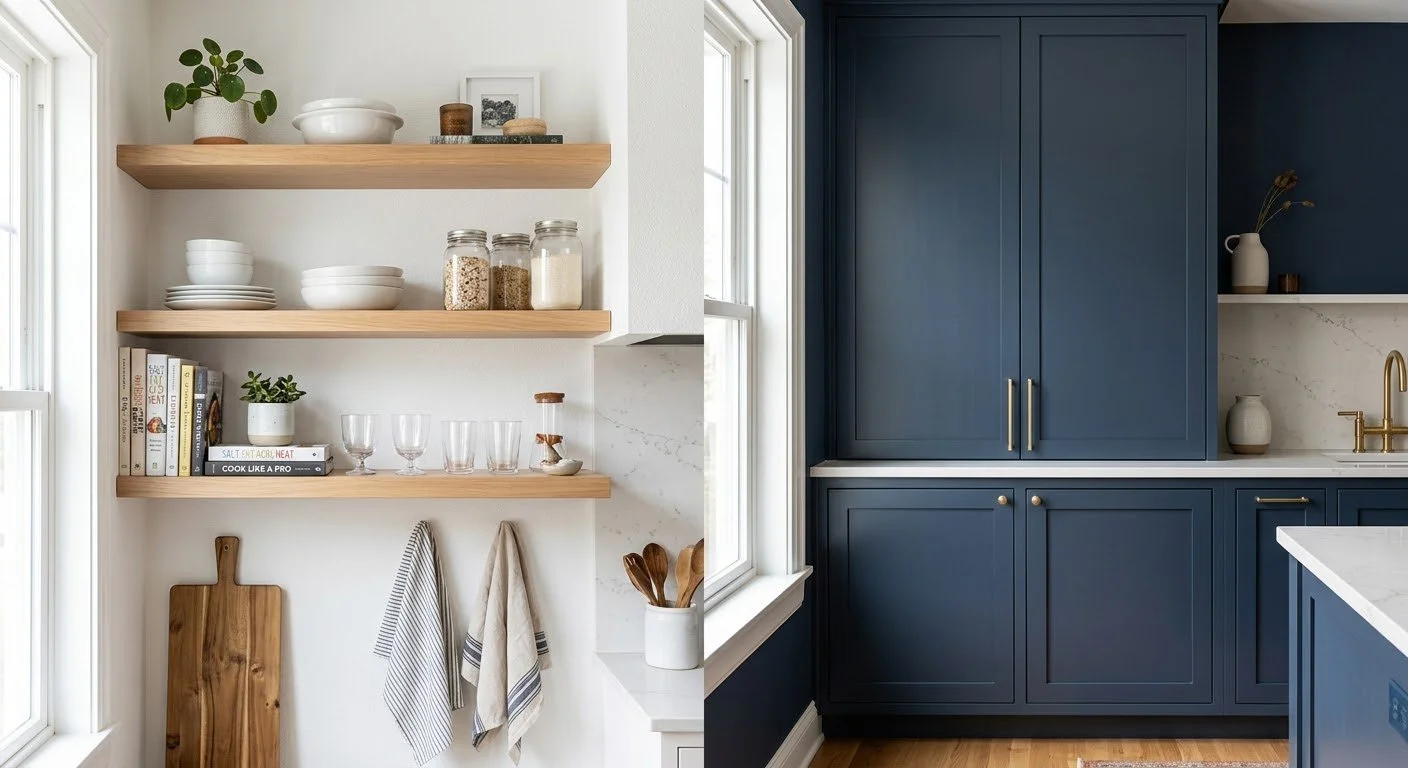
Storage is one of the biggest design decisions you’ll make during a renovation or home refresh. While open shelving creates an airy, styled look, closed cabinetry offers a cleaner and more practical solution. The right answer isn’t choosing one over the other—it’s knowing where each works best.
At West Village Interior, we help homeowners strike the perfect balance between beauty and functionality.
1. Open Shelving Works Best in Styled Spaces
Open shelves are ideal for displaying everyday items that are both useful and beautiful, such as:
Cookbooks
Ceramics
Glassware
Decorative objects
Plants
They create visual openness, especially in smaller kitchens and living spaces.
2. Closed Storage Hides Everyday Clutter
Not everything deserves to be on display.
Closed cabinetry is perfect for storing appliances, paperwork, cleaning supplies, and seasonal items, helping rooms feel calmer and more organized.
3. The Best Homes Use Both
Rather than choosing one approach, many designers combine the two.
A kitchen might feature closed lower cabinets with a few floating shelves, while a living room can mix built-ins with styled display niches.
This creates warmth without sacrificing practicality.
4. Consider Your Lifestyle
Ask yourself:
Do you enjoy styling shelves?
Do you cook frequently?
Do you have children or pets?
How much maintenance are you comfortable with?
Your habits should influence the design more than trends.
5. Make Storage Part of the Architecture
Well-designed storage should feel integrated into the home—not like an afterthought.
Custom millwork, recessed shelving, and built-in cabinetry create a seamless look while maximizing every square foot.
Why This Matters
According to the National Association of Home Builders, storage consistently ranks among homeowners’ most requested design features, proving that functionality remains just as valuable as aesthetics.
Final Thoughts
The most beautiful homes aren’t the ones with the most storage—they’re the ones where storage is designed intentionally.