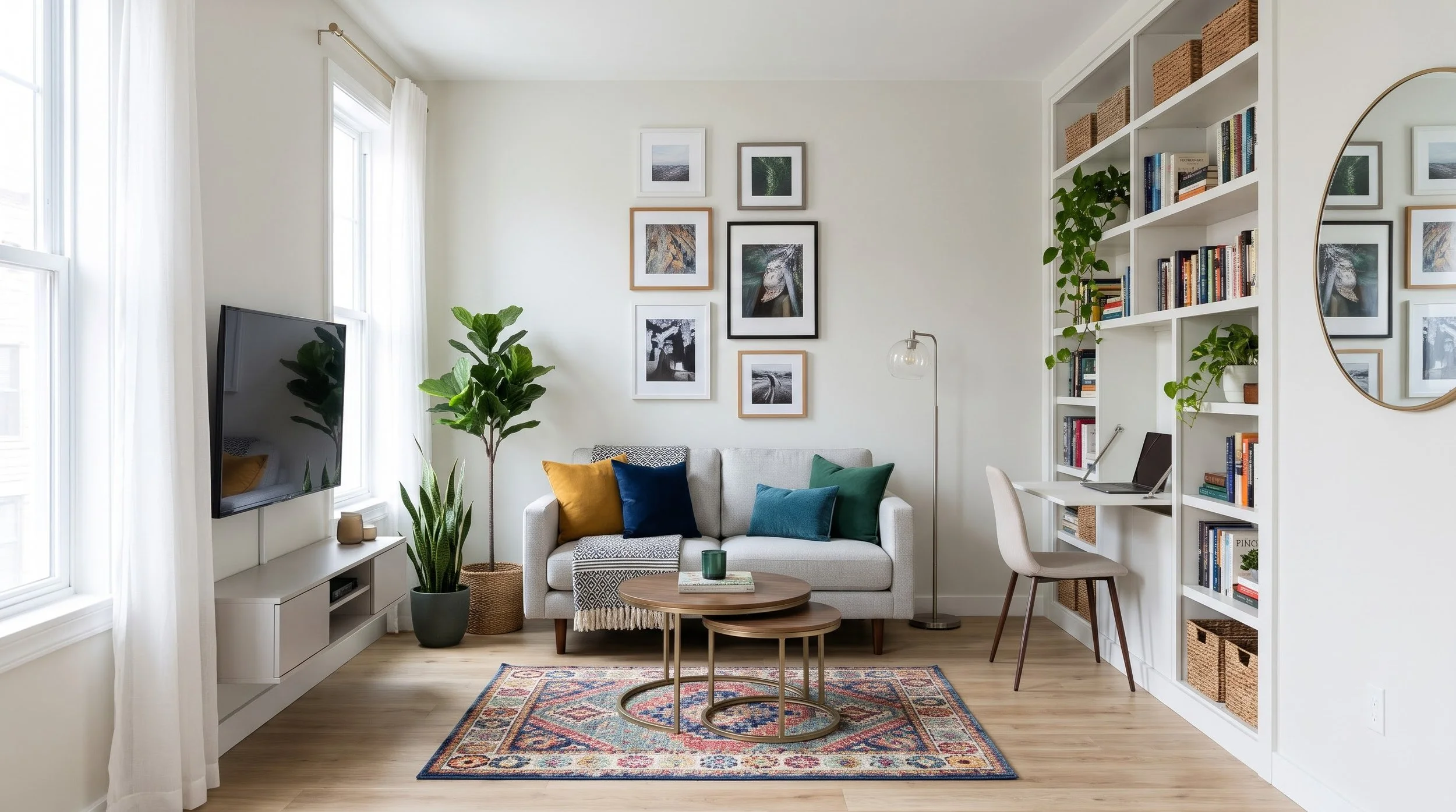
A small living room doesn’t have to feel cramped, cluttered, or limited in design possibilities. With the right furniture, thoughtful placement, and a well-planned layout, even a compact space can feel comfortable, functional, and visually inviting.
The key is to make every piece serve a purpose without making the room feel overly furnished. Whether you’re decorating a city apartment, furnishing a condo, or refreshing a smaller family room, these design strategies can help you create a living space that feels bigger than its actual square footage.
1. Choose Furniture That Fits the Room, Not Just Your Style
One of the most common mistakes in a small living room is choosing furniture based on appearance alone. A large sectional or oversized sofa may look beautiful in a showroom, but it can overwhelm a room with limited floor space.
Start by measuring the room and considering how much space each piece will occupy. Look for:
Sofas with streamlined arms and raised legs that reveal more floor space.
Compact sectionals that fit the room’s proportions.
Nesting tables that can be separated when needed.
Slim-profile accent chairs instead of bulky recliners.
Ottomans that can double as extra seating or a coffee table.
A well-proportioned sofa can make a bigger difference than adding several smaller furniture pieces. The goal is to create a comfortable seating area while leaving enough room to move around naturally.
2. Prioritize Layout and Walkways
A room can feel crowded even when it contains relatively little furniture. Often, the problem is not the amount of furniture but how it is arranged.
Before purchasing anything, identify the room’s natural pathways. Consider how people enter, move through, and use the space. Avoid blocking doorways, windows, or frequently used routes.
Try positioning the sofa against a wall when appropriate, or float it slightly away from the wall if doing so creates a more balanced seating arrangement. In open-plan apartments, a sofa can also help define the living area without requiring a physical divider.
Leave comfortable clearance around furniture, especially along primary walkways. A clear circulation path makes a compact living room easier to use and helps it feel less congested.
3. Use Multifunctional Furniture to Reduce Clutter
In a small home, furniture that serves more than one purpose can be especially valuable. Instead of filling the room with separate pieces for every activity, choose items that offer additional functionality.
Consider:
Storage ottomans for blankets, books, and everyday essentials.
Coffee tables with drawers or concealed compartments.
Console tables that provide display space and additional storage.
Sleeper sofas for occasional overnight guests.
Side tables that can also function as small work surfaces.
The 2026 U.S. Houzz & Home Renovation Trends Study found that 33% of homeowners who renovated in 2025 purchased storage or organizational products. While this figure covers a broad range of home projects, it reflects the continued importance of storage when improving residential spaces.
For a small living room, concealed storage can be particularly useful because it keeps everyday items accessible without leaving everything on display.
4. Make Use of Vertical Space
When floor space is limited, look upward. Walls offer opportunities for storage, display, and visual interest without taking up additional floor area.
Floating shelves, wall-mounted cabinets, and tall bookcases can help maximize unused vertical space. A floor-to-ceiling shelving unit can also draw the eye upward, making the room feel taller.
However, avoid filling every available wall. Too many shelves or decorative objects can make a compact room feel visually busy.
A more balanced approach is to select a few intentional focal points. For example, a tall bookcase can provide storage on one wall, while a large piece of artwork can create visual interest elsewhere.
5. Choose the Right Coffee Table and Accent Furniture
Coffee tables and side tables may seem like secondary pieces, but their size and shape can significantly affect how a small living room functions.
A rectangular coffee table may work well in a narrow room, while a round or oval table can soften the layout and make movement around it easier. Transparent materials, such as glass, can also reduce visual heaviness.
Consider the following when choosing accent furniture:
Keep the coffee table proportionate to the sofa.
Choose rounded edges where circulation is tight.
Use nesting tables when additional surface space is occasionally needed.
Avoid adding too many small accent pieces that compete for floor space.
A few well-chosen pieces will generally create a more cohesive result than filling the room with furniture simply because there is room for it.
6. Use Lighting to Create Depth
Lighting plays an important role in how spacious a living room feels. Relying on a single overhead fixture can leave corners dark and make the room feel flat.
Instead, layer different types of lighting:
Ambient lighting: Provides general illumination throughout the room.
Task lighting: Supports activities such as reading or working.
Accent lighting: Highlights artwork, shelving, and architectural details.
Floor lamps with slim profiles, wall sconces, and table lamps can provide additional light without requiring major changes to the room.
If the room receives natural light, avoid blocking windows with oversized furniture or heavy window treatments. Allowing daylight to reach more of the room can help create a brighter, more open atmosphere.
7. Use Color and Texture Without Overcrowding the Space
Light colors are often recommended for small rooms because they reflect light and create a sense of openness. However, that doesn’t mean a compact living room needs to be entirely white or neutral.
Warm neutrals, muted greens, soft browns, and other earthy shades can add depth while maintaining a welcoming atmosphere. Houzz’s 2026 Emerging Summer Trends Report found increased U.S. search interest in several warm colors, including rust (up 178%), chocolate brown (up 153%), and mushroom (up 69%). These figures reflect year-over-year search activity from January through March 2026, rather than actual purchasing behavior.
You can introduce these tones through:
Accent pillows and throws.
Upholstered chairs.
Area rugs.
Artwork and decorative accessories.
Wood finishes and natural materials.
The important thing is to maintain a consistent palette. Repeating a few complementary colors and textures helps the room feel intentional rather than visually crowded.
8. Select an Area Rug That Defines the Seating Zone
An area rug can make a small living room feel more organized by visually connecting the furniture.
A rug that is too small may make the seating arrangement appear disconnected. Ideally, choose a size that allows at least the front legs of the main seating pieces to rest on it.
For smaller spaces, consider:
Subtle patterns that add interest without overwhelming the room.
Neutral or tonal designs that complement the furniture.
Low-pile materials that are easier to maintain.
Rugs large enough to anchor the seating arrangement.
The right rug creates a visual foundation for the room and helps establish a clear living area, particularly in studio apartments and open-plan layouts.
9. Be Intentional With Decorative Accessories
Decorating a small living room is about finding the right balance between personality and visual simplicity.
Rather than displaying every decorative item at once, choose pieces that contribute something meaningful to the room. A statement lamp, a curated collection of books, or a few carefully selected accessories can add character without creating unnecessary clutter.
Use trays to organize smaller objects on coffee tables, group accessories in varying heights, and leave some surfaces intentionally open.
A room doesn’t need to be filled to feel complete. Negative space gives furniture and decorative elements room to stand out.
Why Thoughtful Furniture Planning Matters
A successful small living room is not simply a larger room with fewer pieces of furniture. It is a space where proportions, circulation, storage, lighting, and aesthetics work together.
The right furniture choices can help maximize usable space, reduce clutter, and make everyday activities more comfortable. More importantly, they allow homeowners to create a room that reflects their lifestyle rather than forcing them to compromise on how they want to live.
Final Thoughts
Making a small living room feel more spacious starts with understanding how the room needs to function. Choose furniture that fits, maintain clear walkways, incorporate multifunctional pieces, and use lighting and color to create visual depth.
You don’t need more square footage to create a living room that feels complete. You need a thoughtful plan and furniture that works together.
At West Village Interiors, we believe good design should make the most of the space you have. Whether you’re furnishing a compact apartment or rethinking your existing living room, our team can help you find furniture and design solutions that balance comfort, function, and style.