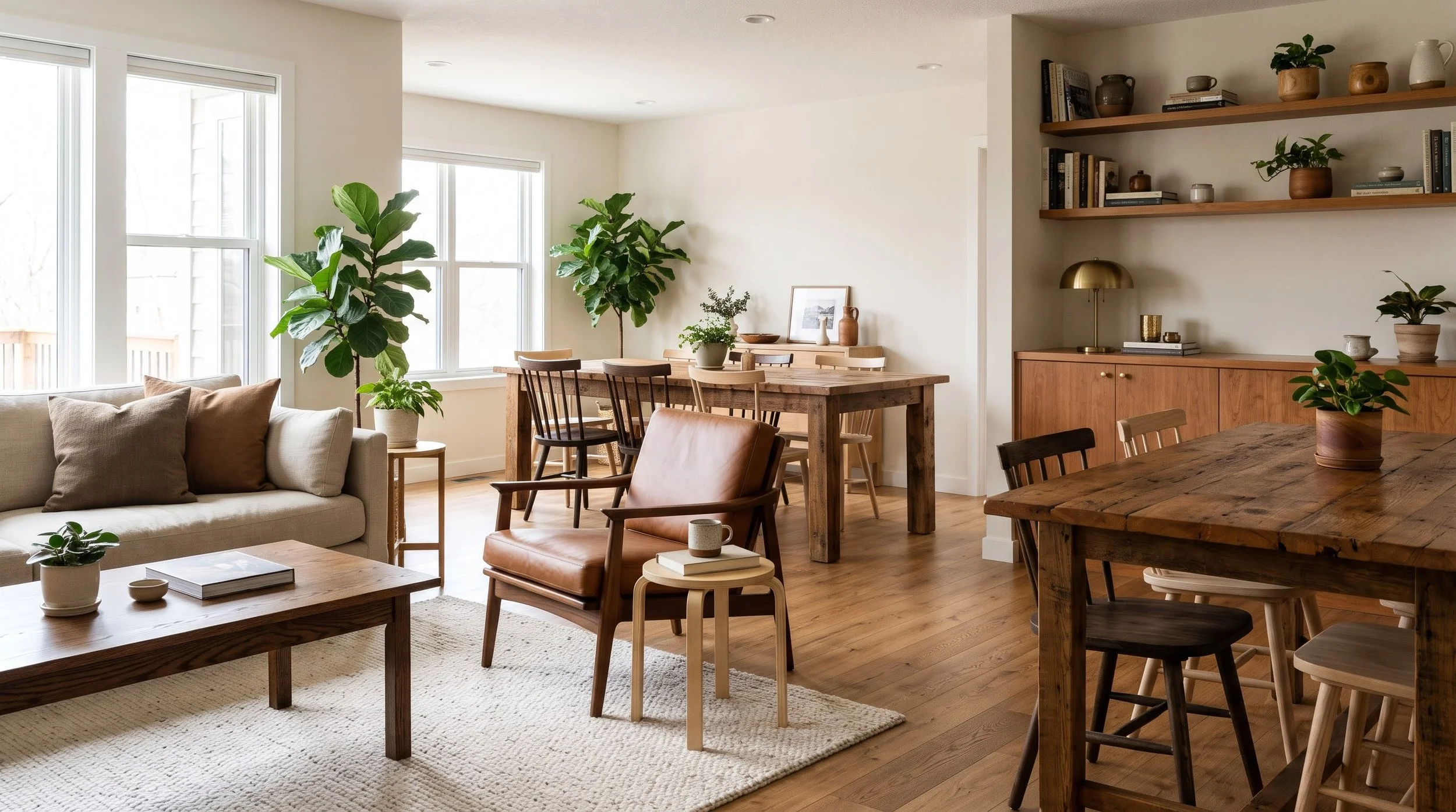
Wood brings warmth, texture, and character to an interior. From hardwood floors and kitchen cabinetry to dining tables and decorative accents, it is one of the most versatile materials in residential design.
But what happens when your existing furniture, flooring, and cabinetry feature different wood finishes?
The good news is that they don’t all have to match. In fact, combining different wood tones can make a home feel more layered, collected, and visually interesting. The key is creating a sense of balance and continuity.
At West Village Interior, we believe a thoughtfully designed home should feel cohesive without looking overly coordinated. Here’s how to mix wood tones with confidence.
1. Identify the Undertones First
Before combining wood finishes, look at their underlying colors.
Wood tones generally have warm, cool, or neutral undertones.
Warm tones: Honey oak, golden maple, and reddish walnut.
Cool tones: Ash, gray-washed oak, and some lighter contemporary finishes.
Neutral tones: Natural oak and certain medium brown finishes.
You can mix different undertones, but understanding them helps you avoid combinations that feel unintentionally disconnected.
Start by identifying the dominant wood tone in your room, such as the flooring or largest furniture piece, and use it as your reference point.
2. Choose One Dominant Wood Tone
A room with too many competing finishes can feel visually busy.
Instead, establish one dominant wood tone and allow other finishes to complement it.
For example, if your flooring is a warm natural oak, you might introduce a darker walnut dining table and lighter wood accessories.
The flooring provides continuity, while the contrasting furniture adds depth.
3. Create Contrast Through Light and Dark Finishes
Different wood tones can work beautifully together when there is enough contrast.
Pairing a dark wood coffee table with lighter oak flooring, for instance, creates definition and prevents the room from looking flat.
However, contrast should feel intentional. Avoid introducing several finishes that are almost—but not quite—the same shade unless there is another design element connecting them.
4. Repeat Wood Tones Throughout the Room
Repetition creates visual rhythm.
If you introduce walnut through a dining table, consider repeating that tone in a picture frame, shelving detail, or smaller furniture piece.
This doesn’t mean every room needs matching furniture. Even a few repeated finishes can help different elements feel connected.
5. Balance Wood With Other Materials
Wood doesn’t have to do all the visual work.
Introduce materials that complement its natural texture, such as:
Natural stone
Linen and cotton
Leather
Brushed metal
Glass
Ceramic finishes
For example, a walnut dining table paired with upholstered chairs, a stone centerpiece, and soft neutral textiles can feel balanced without introducing more wood.
6. Pay Attention to Grain and Texture
Color isn’t the only factor when combining wood finishes.
Wood grain, sheen, and texture also influence how different pieces relate to one another.
A heavily textured rustic oak table may look out of place beside highly polished, uniform cabinetry, even if the colors are similar.
Look for a balance between smooth and textured finishes, and consider whether the overall design direction is contemporary, traditional, or somewhere in between.
7. Don’t Forget the Bigger Picture
Wood tones should work with the entire interior—not just with one another.
Consider the relationship between your wood finishes, wall colors, upholstery, lighting, and flooring.
A cohesive palette allows contrasting materials to feel intentional rather than mismatched.
Why This Matters
Wood is often a long-term investment in a home, particularly when it appears in flooring, cabinetry, and substantial furniture pieces.
Learning how to combine different finishes allows homeowners to keep existing furniture, introduce new pieces, and update their interiors without replacing everything.
Final Thoughts
A beautiful interior doesn’t require every wood finish to match. It requires a thoughtful relationship between color, texture, contrast, and proportion.
Whether you’re furnishing a new home or refreshing an existing space, mixing wood tones can create an interior that feels warm, personal, and timeless.
At West Village Interior, we bring together materials, furniture, and architectural details to create homes that feel cohesive while retaining their individual character.
The goal isn’t to match every finish. It’s to make every finish feel like it belongs.