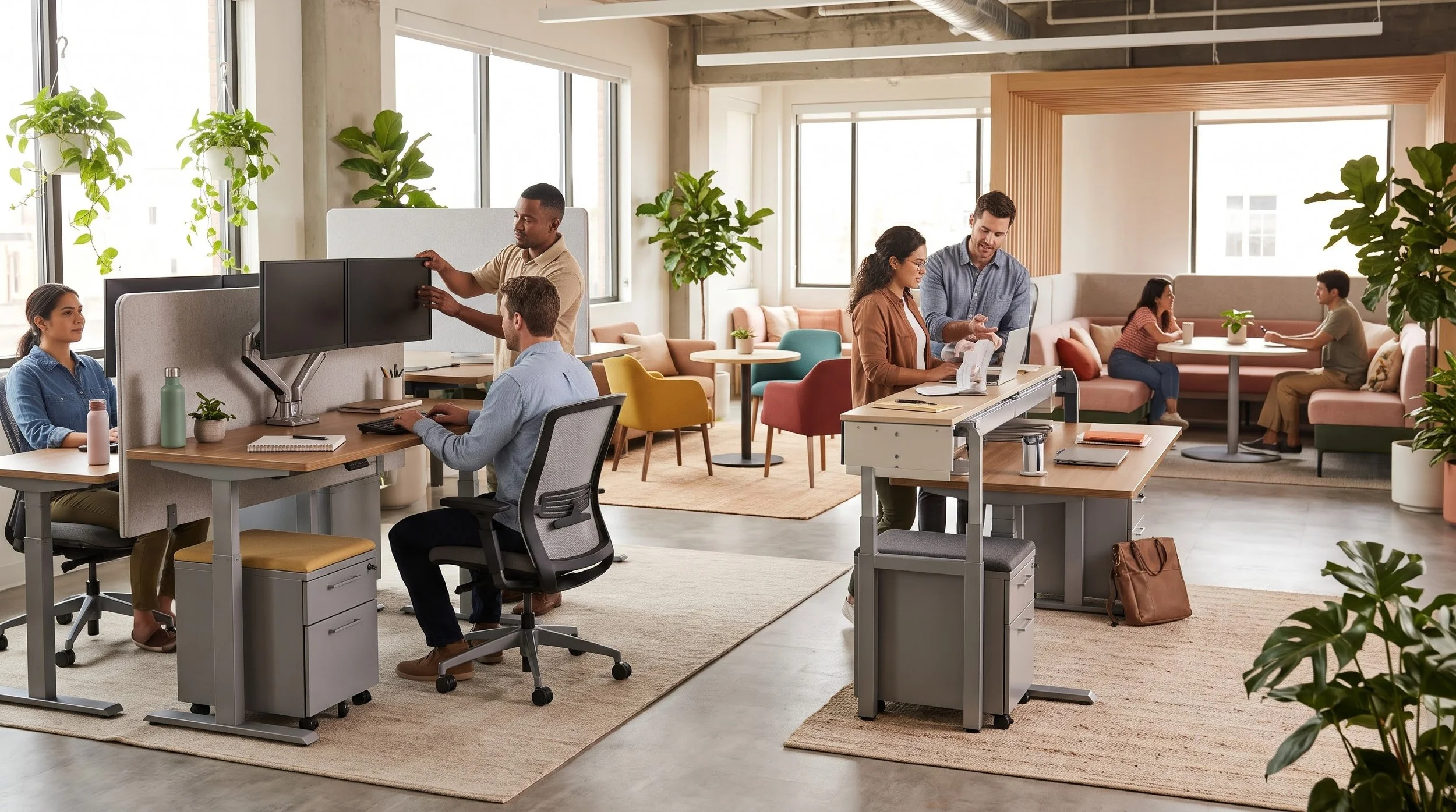
Office furniture does more than fill a room. It influences how employees work, move, collaborate, and experience their workplace every day. The right pieces can make an office feel organized and comfortable, while poorly chosen furniture can create unnecessary clutter, limit movement, and make daily tasks less convenient.
When designing an employee workspace, furniture should be selected with both functionality and aesthetics in mind. From individual workstations to collaborative seating, every piece should serve a purpose while contributing to a cohesive office environment.
Here are some important considerations when selecting furniture for a modern workplace.
1. Start With Workstations That Support Everyday Tasks
Desks are among the most frequently used pieces of furniture in an office, so choosing the right size, shape, and configuration is essential.
Before selecting workstations, consider the equipment employees use, the amount of desk space they need, and whether their work involves individual tasks or frequent collaboration.
Some options include:
Individual desks for employees who need dedicated work areas.
Bench-style workstations for offices with limited floor space.
L-shaped desks for roles that require additional surface area.
Height-adjustable desks for employees who prefer alternating between sitting and standing.
The goal is to provide enough functional workspace without overcrowding the office.
2. Invest in Comfortable and Ergonomic Seating
Office chairs should be selected based on comfort, adjustability, and durability—not appearance alone.
Since employees spend extended periods sitting, seating should provide appropriate support and accommodate different body types and working preferences.
Look for adjustable seat height, supportive backrests, lumbar support, and armrests where appropriate. For shared workstations, adjustable chairs are particularly useful because different employees may use the same seating throughout the day.
For meeting rooms and collaborative areas, consider seating that offers comfort while complementing the overall office design.
3. Incorporate Storage Into the Furniture Plan
An organized workspace depends on having convenient places to store everyday essentials.
Instead of relying entirely on separate storage rooms, consider incorporating storage directly into the furniture layout.
Filing cabinets, mobile pedestals, desks with drawers, credenzas, and modular shelving can help keep frequently used materials accessible without taking up unnecessary floor space.
For smaller offices, vertical storage and multifunctional furniture can be especially useful.
4. Choose Collaborative Furniture That Encourages Interaction
Not all workplace activities happen at individual desks. Employees also need spaces where they can exchange ideas, review projects, and have informal discussions.
Furniture can help establish these areas without requiring permanent partitions.
Consider:
Communal tables for group discussions and shared tasks.
Modular lounge seating for informal conversations.
Small round tables for quick meetings.
Movable chairs that allow spaces to adapt to different group sizes.
Flexible furniture arrangements make it easier for an office to accommodate changing needs throughout the day.
5. Select Furniture That Fits the Available Space
A beautiful piece of furniture may not be the right choice if it makes an office difficult to navigate.
Before purchasing, consider the dimensions of the room, workstation spacing, circulation paths, and how furniture will interact with doors, windows, and other architectural features.
Avoid selecting oversized desks, bulky storage units, or lounge furniture that restricts movement.
In smaller offices, streamlined silhouettes, open-base furniture, and pieces with multiple functions can help maximize the available floor area.
6. Balance Durability With Visual Appeal
Office furniture experiences regular use, so materials and construction matter.
Workstations should have surfaces that can withstand everyday wear, while chairs and lounge seating should use durable upholstery that is practical to maintain.
At the same time, durability does not mean sacrificing design. Wood finishes, metal details, textured upholstery, and carefully selected colors can introduce warmth and personality into an otherwise standard office.
Choosing a consistent material palette also helps different furniture pieces feel connected, even when they serve different functions.
7. Think Beyond Matching Furniture Sets
An office does not need to use the same furniture collection throughout every area to feel cohesive.
In fact, combining different furniture styles can create a more layered and inviting environment when there is a clear design direction.
For example, a workspace might feature simple, functional desks paired with upholstered meeting chairs, warm wood storage, and contemporary lounge furniture.
The key is to maintain consistency through finishes, proportions, colors, and overall design language rather than purchasing every piece from the same collection.
Why This Matters
Furniture directly affects how employees interact with their surroundings. The right selections can improve organization, support different working styles, and make better use of available office space.
A thoughtful furniture plan also helps businesses make informed purchasing decisions. Rather than buying pieces individually as needs arise, companies can create a coordinated environment that considers functionality, durability, comfort, and long-term use.
Final Thoughts
A well-designed employee workspace starts with furniture that works as hard as the people using it. From ergonomic desks and supportive chairs to flexible meeting furniture and practical storage, every selection contributes to the overall experience of the office.
At West Village Interiors, we believe commercial furniture should bring together comfort, functionality, and thoughtful design. With the right furniture selections and layout, an ordinary office can become a more organized, welcoming, and adaptable place to work.