How Office Layouts Influence Team Collaboration More Than You Think
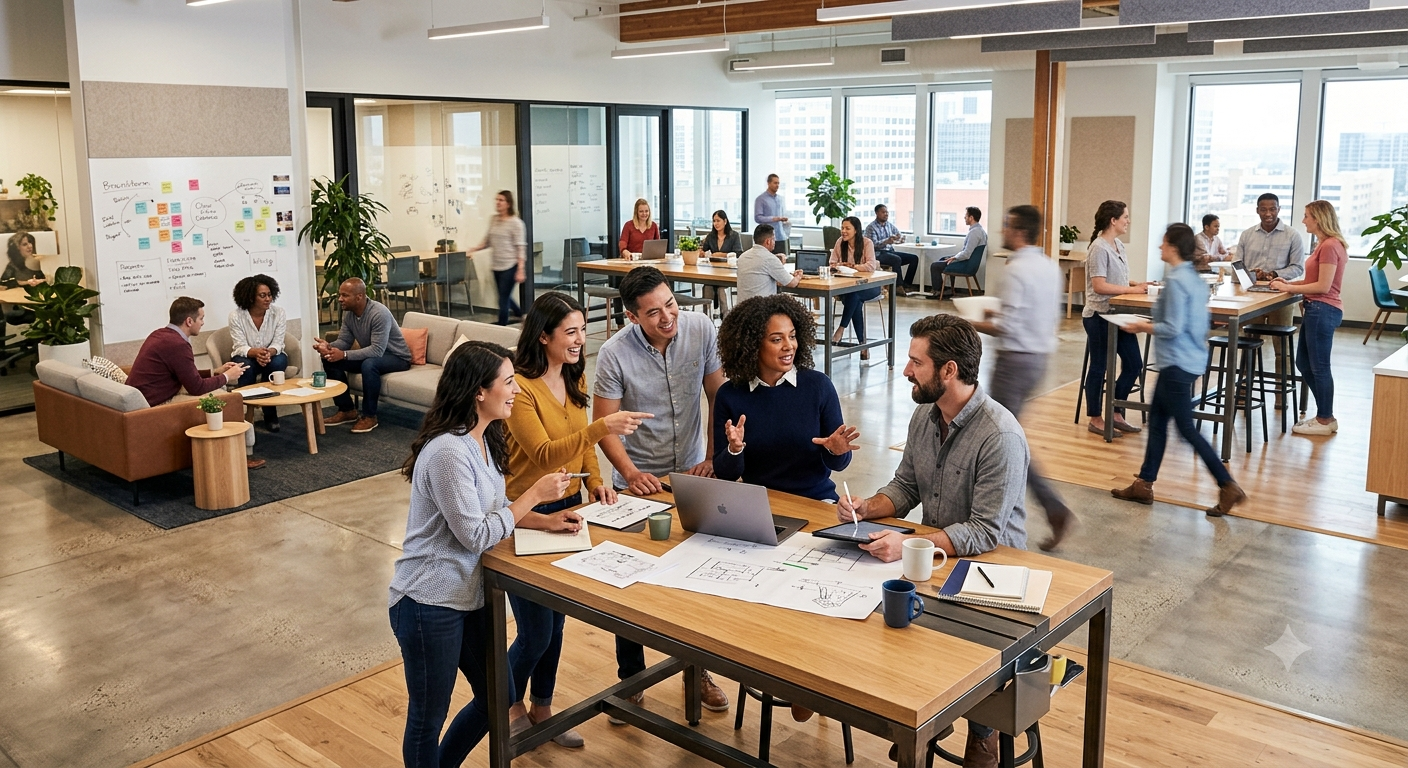
Office design is about more than aesthetics—it shapes how people work together.
The way desks, meeting areas, and shared spaces are arranged can either encourage collaboration or create unnecessary barriers between teams.
According to research by Steelcase, thoughtfully designed workplaces can improve employee engagement and collaboration by giving people a variety of settings for different types of work.
At West Village Interior, we design offices that support communication, flexibility, and productivity without sacrificing comfort.
1. Collaboration Starts With Proximity
Teams that frequently work together benefit from layouts that reduce unnecessary movement while still allowing for focused work.
Strategic adjacencies improve communication without increasing distractions.
2. Not Every Conversation Belongs in a Conference Room
Modern offices benefit from a variety of collaboration spaces, including:
Small huddle rooms
Lounge seating
Standing meeting areas
Open collaboration tables
These spaces encourage quick conversations and spontaneous idea sharing.
3. Balance Is Key
Open offices can improve visibility, but too much openness often increases distractions.
The most effective layouts combine collaborative zones with quiet spaces for focused work.
4. Circulation Impacts Productivity
Wide, intuitive pathways improve movement throughout the office and reduce congestion during busy periods.
Employees spend less time navigating the workplace and more time doing meaningful work.
5. Flexible Layouts Support Growth
Businesses evolve over time.
Modular furniture and adaptable floor plans allow offices to grow with changing team sizes and workplace needs, reducing the need for costly renovations.
Why This Matters
A well-planned office layout supports communication, employee satisfaction, and operational efficiency.
Through our trade partnerships, West Village Interior helps businesses create workplaces that reflect how teams work today while remaining flexible for tomorrow.
Final Thoughts
The best office layouts don’t happen by accident.
They result from understanding how people move, collaborate, and use the space every day.