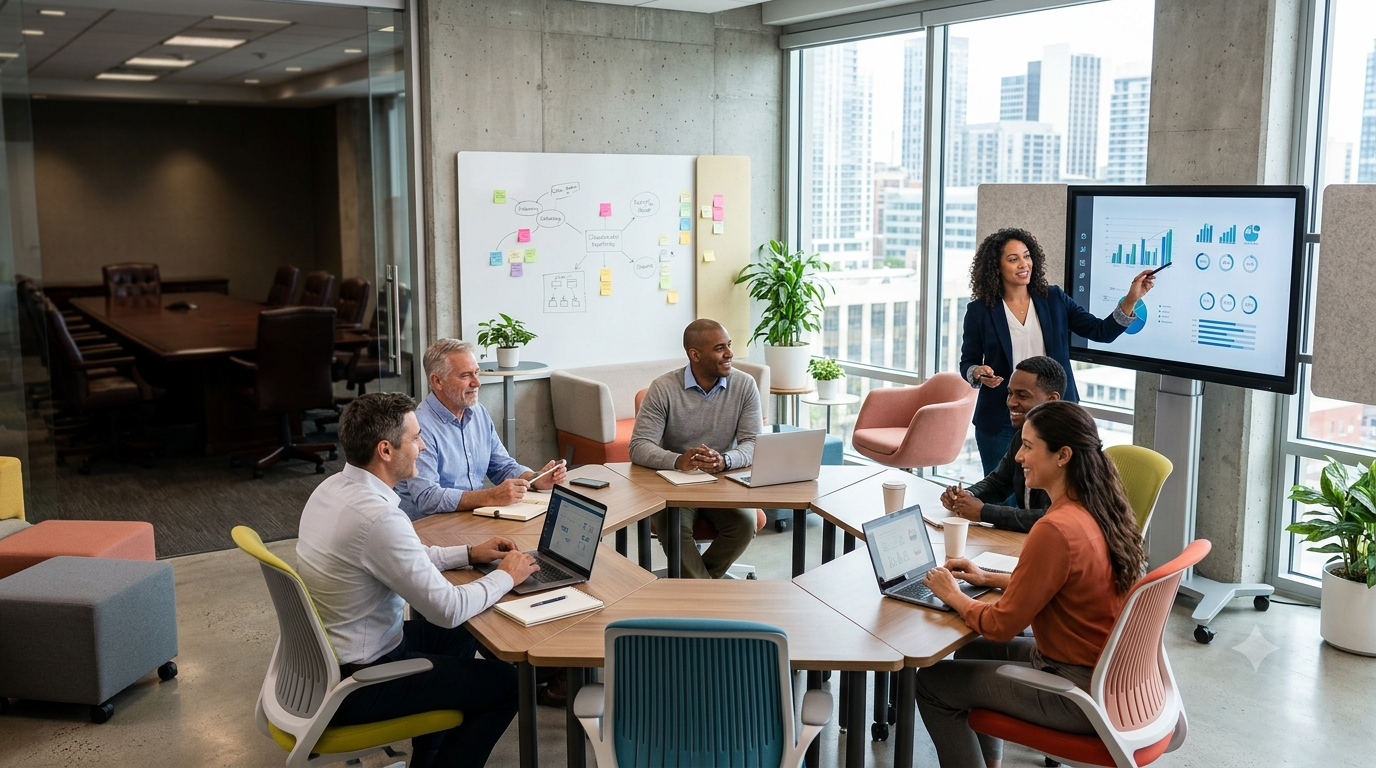
The traditional boardroom was once the centerpiece of every office. Today, many businesses are finding that these large, formal spaces sit empty for much of the workweek.
As hybrid work and collaborative teams become the norm, companies are redesigning offices with smaller, more adaptable meeting spaces that support a wider range of activities.
At West Village Interior, we help businesses create offices that reflect how teams work today—not how they worked ten years ago.
1. Meetings Have Changed
According to workplace research from Gensler Workplace Surveys, employees increasingly come to the office for collaboration rather than individual desk work.
This shift requires spaces that support brainstorming, quick check-ins, client meetings, and hybrid video calls.
2. Flexibility Maximizes Square Footage
Instead of one oversized conference room, businesses are incorporating:
Small meeting rooms
Lounge collaboration areas
Phone booths
Multi-purpose project spaces
These environments can be used throughout the day by different teams.
3. Technology Is Driving Design
Modern meeting rooms must support seamless virtual collaboration.
Design considerations now include:
Camera placement
Acoustic treatments
Screen visibility
Power accessibility
Technology is no longer an afterthought—it’s part of the design process.
4. Comfort Improves Participation
Employees are more engaged when meeting spaces feel comfortable and inviting.
Residential-inspired furniture, warm lighting, and soft materials encourage longer, more productive discussions.
5. Adaptability Protects Your Investment
Business needs evolve quickly.
Flexible furniture and modular layouts make it easier to reconfigure meeting spaces as teams grow and workflows change.
Why This Matters
Meeting spaces should support collaboration, not limit it.
Through our trade partnerships, West Village Interior helps businesses design adaptable offices that maximize both productivity and long-term value.
Final Thoughts
The future of workplace design isn’t about building bigger boardrooms.
It’s about creating flexible spaces where collaboration can happen naturally.